“A” Little Mermaid
Once upon a time…
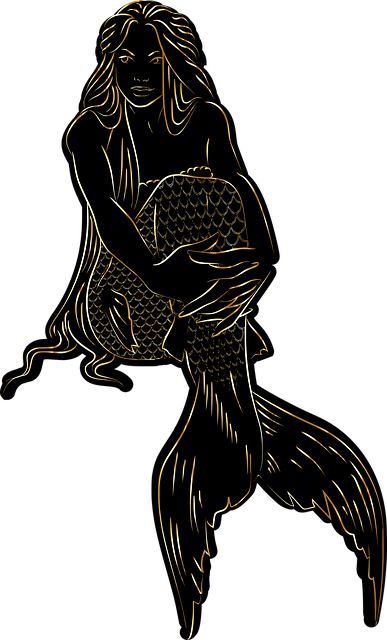
There was a little mermaid.
Her hair was red.
Or black.
Or blue.
Or green like seaweed.
Her tail was shiny…or scaley…or covered with sleek fur. 🦭
And when she sang, her voice joined her cousins and distant relatives-thrice-removed who swam in seas, lakes and rivers the world over.
Heads (tails?) up. Disney didn’t create the little mermaid. Or even follow the accredited storyline of Hans Christian Andersen (who also didn’t create mermaids).
Celebrate swim season by diving into the magical domain of these resilient water dwellers and becoming part of their world.
This week’s play invitations focus on relationships. It is the most important of the resilience-nurturing experiences. AND…it dominates all versions of The Little Mermaid (and most fairy tales!)!
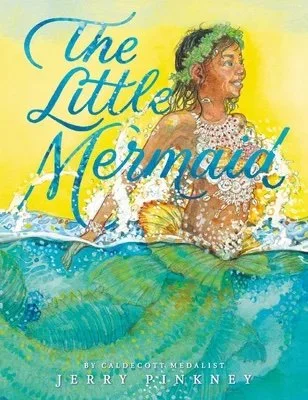
The Little Mermaid
written and illustrated by Caldecott Medalist Jerry Pinkney
Why THIS version?
Beautifully told and illustrated.
Focuses on a friendship between two girls, a Mer and a human, rather than romance.
This Little Mermaid, Melody, uses quick thinking and bravery to recover her voice and save her family.
Similar enough to Andersen/Disney story that children will make the connection.
Mer and humans are Black, like the “new” Arial!

Without her voice, The Little Mermaid in Jerry Pinkney’s version figures out other ways to tell her stories to her new friend.
Like children everywhere, she draws pictures with a stick in the sand!
Invite children to do the same! This offers them a new way to play and interact with their friends.
What you’ll need:
Sticks of various sizes, strong enough to bear down when making marks
Sandbox, sand table, or sand in bins or on trays
What messages do they want to share with their friends?
Can their friends guess what their message is about?
Are there gestures, signs or objects they can use to share their meaning?
What about pictures in books or that they find around the classroom?
Of course, since the goal is to connect with friends, just making marks in the sand together makes this simple, resilience-building play!

Children love to share their drawings and stories with adults!
But how about their friends?
Do you have a way that they can share notes, whether it’s pictures, early mark-making, dictated messages or, for older kids, written letters?
Setting up your Story Center with some Mer-inspired materials is a great start.
Purple and black crayons make great squid-ink scribblings!
Fish and shell stickers are common in dollar stores.
Still have butterfly stickers from spring? That tracks with the gift her human friend gives Melody, this week’s Little Mermaid.
What about a Mer Mailbox that the children decorate?
Or, if you have access to conch shells, children can slip small paper messages into the shells.
A sea turtle messenger can deliver them (just like in the story!).
Offer younger children address labels with their friends’ names pre-printed. Can they find their friend’s name?
When school-age children come to summer programs, they can join in! They will enjoy sending their own pictures and notes to friends!
And, if they are willing, they can act as scribes for younger children who cannot yet write words.
(Mer don’t care much about correct spelling or grammar, since their language is mostly in picture forms and dolphin-squeaks! The goal is building relationships, empathy, and having fun!)
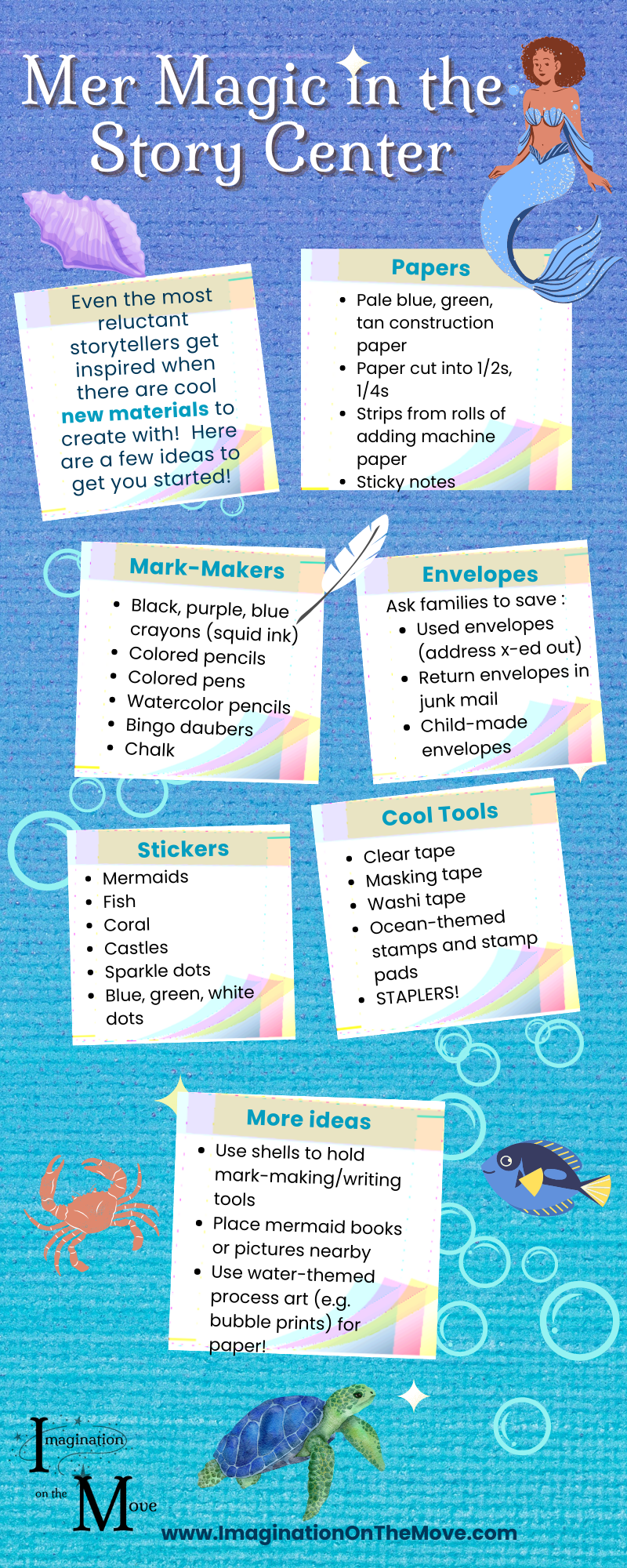
Children will get even more excited about creating secret messages to their friends at a Mer-inspired Story Center!
Here’s a list of supplies that can add some sparkle to your story/writing center AND to jumpstart your own thinking!