Of Changed Plans and Children: Reflections on September 11, 2001
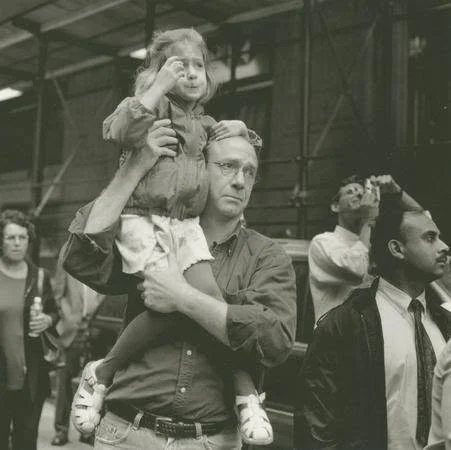
My friend Bud and his daughter Sophie, captured by photographer Kevin Bubriski in the book, PILGRIMAGE...Looking at Ground Zero.
🏙️
Once upon a time…
On September 11, 2001, I was the director of an early childhood program in suburban Philadelphia. The following is an article I wrote, originally published in the December 2001 DVAEYC Connection, the bi-monthly newsletter of the Delaware Valley Association for the Education of Young Children.
In the quarter century since, much has changed. But our grown-up tendency to make plans and assume that children can, should, and will follow along has not. As we imagine what the next quarter-century will bring, perhaps it’s time to revisit the more subtle lessons of that tragic day.
🏙️ 🖤 🏙️
9/11/01: Stories of Parents in Our Program
🏙️ Liz, Lanie’s mom, walks weeping past my office. I step out to calm her. Choking back tears, trying to apologize, she tells me that she had planned to go to New York City that morning to visit the Statue of Liberty, to see the sights, that she should have been there, would have been there… except for unrelenting morning sickness.
🏙️ Brian strides grimly down the hall and marches into the church office where the minister, our patient landlord, listens to the news on TV. I politely ask if I can close the door so the kids won’t be disturbed. They nod.
But then I notice that Brian, Teddy’s unflappable computer guy dad, is pale and shaky. His 9 a.m. meeting in NYC had been unexpectedly postponed until noon. He had been at 30th Street Station, about to get on the later train when he heard the news. His original train would have been under the WTC when the first plane hit.
🏙️ Pete, Dustin’s dad, was waiting with a colleague in Newark to meet a third man and then board a train for a 9 a.m. meeting at the Trade Center. One train came, and then another. Pete's colleague got anxious, and urged him to leave without their partner. But Pete is a collaborator and a people person, and so they waited.
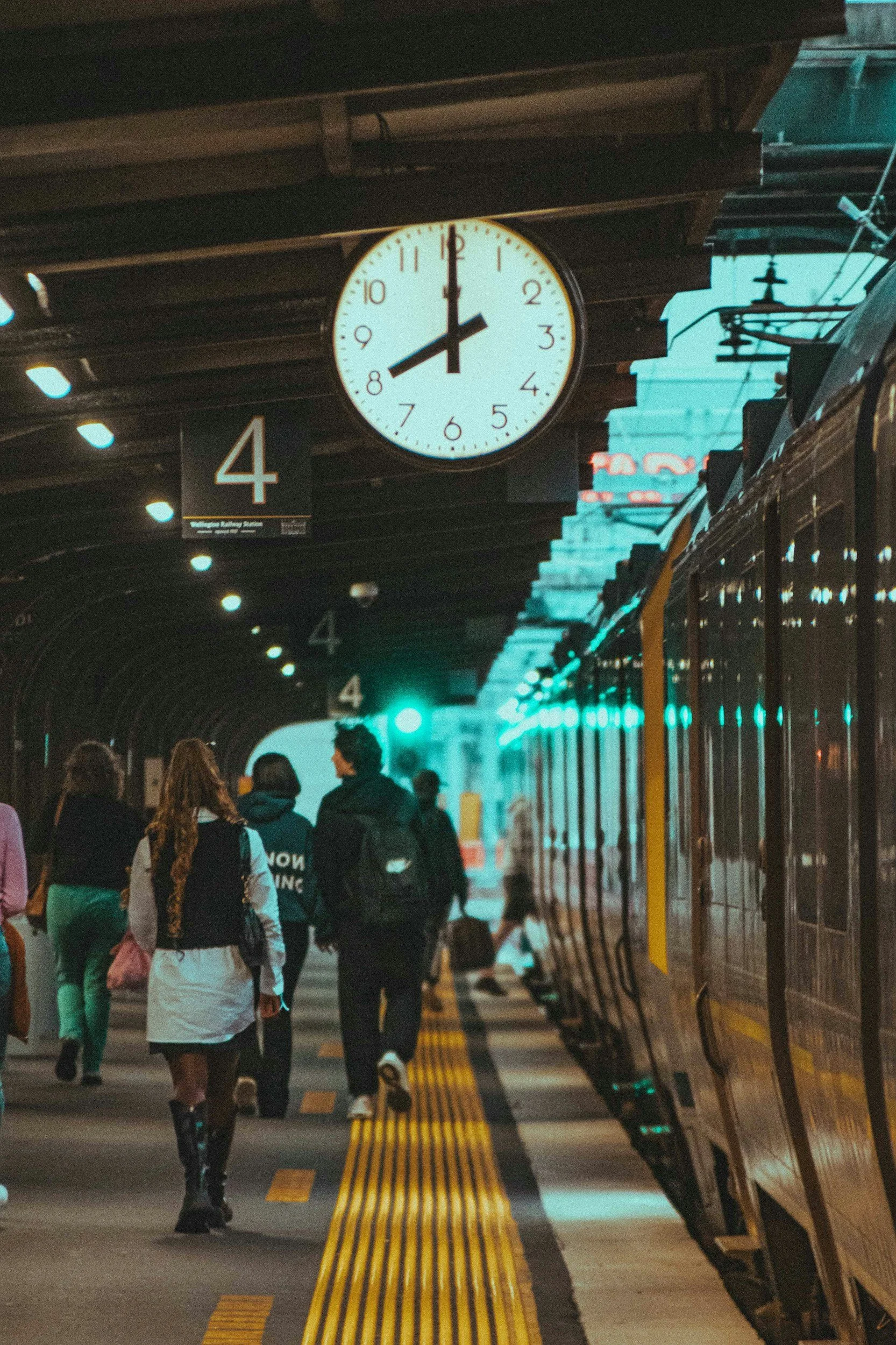
They never got to the meeting. Instead, they were able to go home that night and gratefully hug their wives and children.
In the days since tragedy wiped our perspective clean, we have heard many, many stories. These three are only a few of the astounding number of "just missed" tales that I've heard. Alarm clocks that didn't go off. A child's first day of kindergarten. A late bus . . .So many reasons that plans didn't go the way they were supposed to.
One can get philosophical or spiritual and ponder the why behind each of these '*just missed" stories. I leave that to each individual.
But as a community of learners sharing in the wonder and delight and, yes, challenges, of early childhood, we can look for a few shards of wisdom in the rubble of what has happened, and ponder.
Liz later shared with me how frustrated she had been when, the week before, the same morning sickness had prevented her from seeing Riverdance. She'd had tickets for months, she said, and had been really looking forward to it.
Similarly, I’m quite sure that there was plenty of muttering at Brian’s house when he got the late-night call about the change in meeting times. It probably meant he wouldn't be home in time for a soccer game—and, what with having to commute during rush hour, forget dinner!
Whether it is a traffic jam, or cancelled doctor's appointment, or an airline delay, we tend to get frustrated and irritated when OUR plan for the day, week, or month has been thwarted.
If we can't let it go, this irritation gets in the way of getting on with that plan, or any plan at all.
It certainly blocks our vision of new opportunities that open for us because of the change.
What does this look like with children? If anyone is a master at changing our plans, it is the child below the age of six!
Going out to dinner? Well, the baby will throw up on your new dress, or your two -year-old will hide one of dad's shoes. Think having a birthday party will be fun? How about the one where your three-year-old hides behind your knees the whole time while you try to entertain his friends? Potty training by two? Yeah, right!
Yet it is not only unpleasant events that distract us from our paths. The children at our program are always messing up our well-thought plans with their astounding discoveries and wonderful ideas.
I think of last spring, when Linda was working with a few of the children to prepare the soil for our garden. Daniel suddenly yelled, "Look! That worm's having a baby!”
Linda knew better. She told him that worms don't have babies live, and continued to dig.
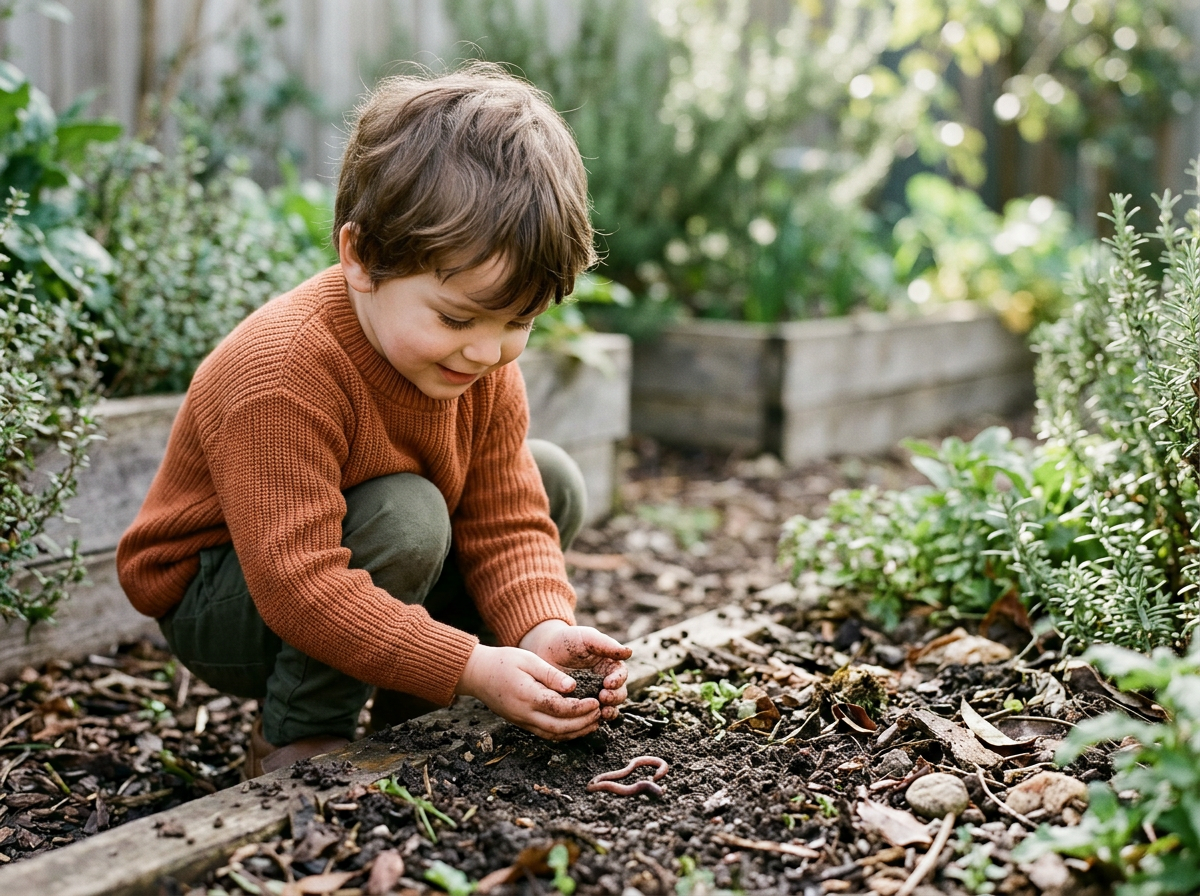
"But she's having another one!" shouted Daniel.
As everyone gathered around, the miracle of worm birth was observed and we all discovered that some worms do, indeed, give live birth, a fact that still amazes me!
We tunneled into a study of worms that was as rich as the soil they live in. The garden did eventually get finished too, although not according to plan.
Last year, two of our kindergartners forced us to rethink cooperative playtime when they kept bringing the tape and scissors and staplers over to the Writing Center.
The writers had no room to write and draw because of the huge and complex rocket ships and machines the boys excitedly constructed there every morning.
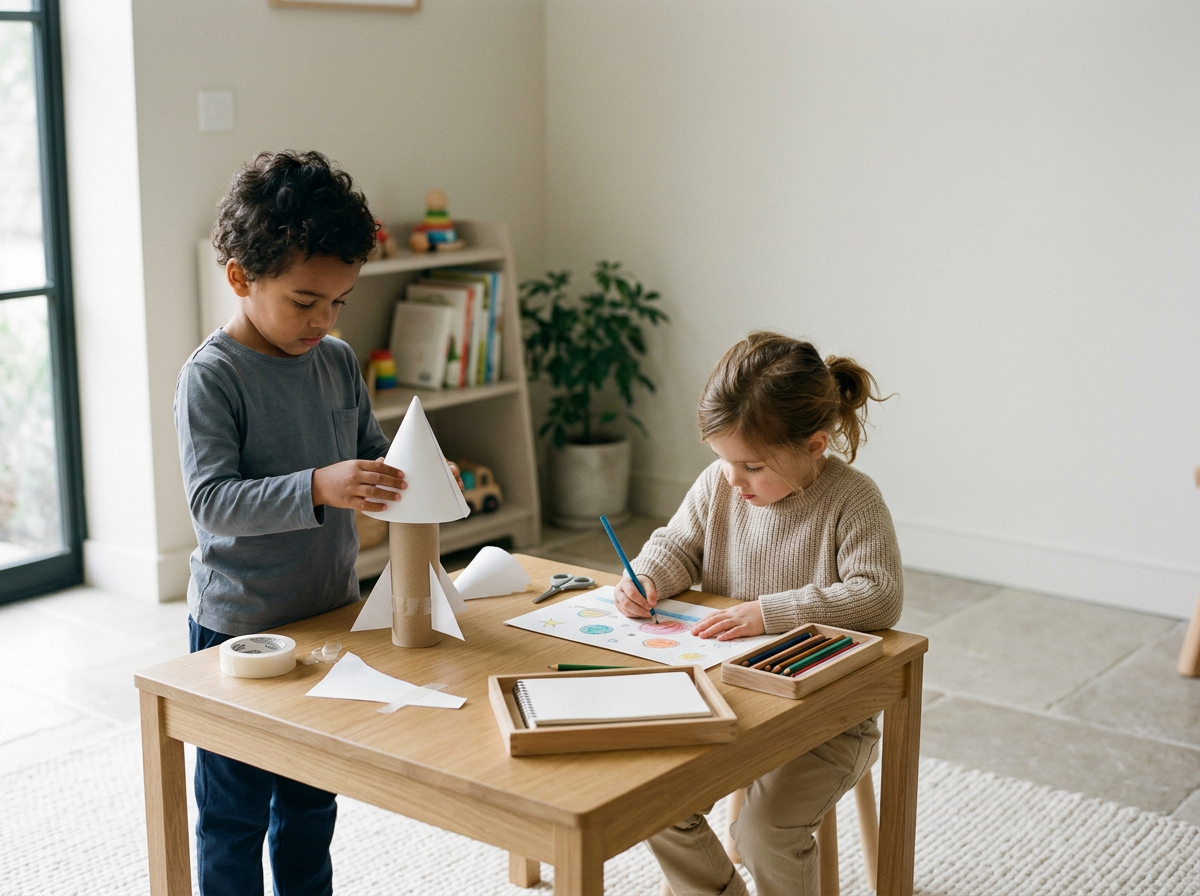
We valued the writing process, and it was being interrupted. Forbidding tape and staplers at the table, however, just resulted in massive folded constructions. 😂
After several weeks of puzzling, we decided that we clearly needed a Construction Table to complement the Writing Center.
Now everyone could represent their ideas in the way that made the most sense to them.
As humans, we need to make plans.
We like a sense of order and structure.
We enjoy the security of knowing what's coming next.
But as the events of September 11 so starkly and graphically showed us, we don't always have control over how things transpire.
Our plans do get sidetracked.
Whether the diversions lead us to worm babies, or the chance to rejoice at being alive, these diversions will continue to happen.
How we perceive them, and how we respond to them, is the real challenge.
What if each of us paused the next time we have to shift gears with children?
What if we spent a moment reflecting on the wonderful adaptability of the human brain and the myriad of possibilities for every moment?
Then perhaps, perhaps, we will begin the healing process our world has been calling out for since long before September I l, 2001.