
Toads or Diamonds: Which Would YOU Deserve?
Once upon a time…
There were kind people, and unkind people, all over the world. Kind of like…now.
This week’s tale is not well known, but there have been variants told throughout the world. Over 900, dating back at least to the 1500s!
It rivals Cinderella and scholars believe it was woven into many versions of the Cinderella tale over time.
I have always thought it was the perfect story for young children. Their understanding of right and wrong is black and white at this stage of development.
Good deeds get rewarded.
Bad deeds get punished.
Understanding nuances of intention takes time to develop.
And nuance plays no role in this story! The kind sister is rewarded with diamonds and flowers spilling from her lips when she speaks.
The unkind sister gets toads, snakes and spiders.
Easy peasy justice.
Self-regulation and an understanding of moral justice develop in intertwined but separate ways during early childhood.
Stories that align with their development scaffold these processes. And inspire play and the imagination!
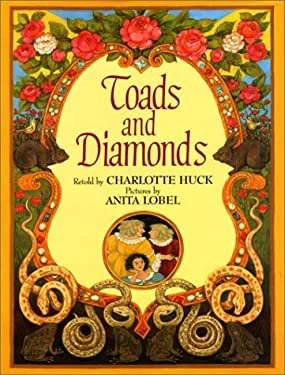
Toads and Diamonds
Retold by Charlotte Huck & Illustrated by Anita Label
Why this variant?
Lively retelling of the story
Bold, bright, detailed illustrations are excellent for group or individual sharing
Both sisters meet animals to be kind to, in addition to the magical helper
Gift of diamonds from her mouth stops when she is happily with the prince; she is loved for herself
Don’t know the story? Above is a version performed by fifth-graders!
Shiny, Slimy Sensory Play: Self Regulation
Sand and water play (or any kind of sensory play) are perfect places to develop self-regulation!
This article describes lots of ways how.
Adding toads and diamonds to your sensory play is easy!
Collections of both can start with a browse through dollar stores, thrift stores, or garage sales.
I once bought cards of multiple spider and bat rings for $1 and snipped off the rings!
A request to families for old “junk” jewelry may also add to your stash of gems.
Too busy to search? Here are jewels from Oriental Trading, and a collection of toads, snakes, etc. from Amazon.
Put them in your sensory table or bins.
Or add them to oobleck! (Note: another recipe recommends using tempera paint instead of food coloring if you choose to color your oobleck. It stains less).
Take it outside!
There are myriad reasons to get kids outside to play!
Developing self-regulation is one of them.
Kids move more, in different ways, so they have to self-regulate their bodies.
Their pretend play is “bigger.” So are the emotions and potential for conflicts to self-regulate.
And, just being outside in nature soothes overwhelmed sensory systems,scaffolding self-regulation!
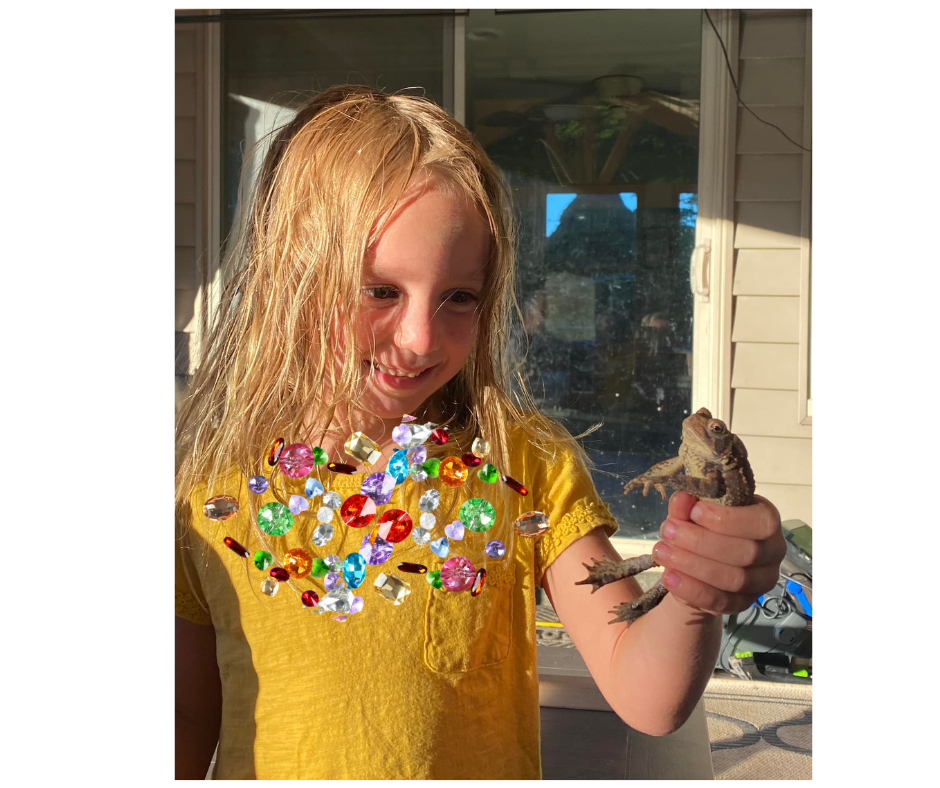
Here are a few story connections to add to your fall outside play time!
1. Transport those sparkly gems and wriggly creatures outside to your sand or digging area. Bury them and invite a treasure hunt. Or…just put them out as see what happens.
2. Worried about losing them? Older kids can help count them. Use unifix cube matching, tally marks, counting grids etc. to keep track. Bring those STEM tools outside too!
3. Look for REAL creepy crawlers and gems! Even the most urban play space has insects and rocks. Kids regulate their focus and attention to find the treasures, and have to self-regulate so they don’t squish the creatures or lose their pebbles.